.png)
Aluminium Extrusion for Bus Body : Lightweight and Crash Resistant Solutions
- PT Damai Abadi .
- May 8
- 4 min read
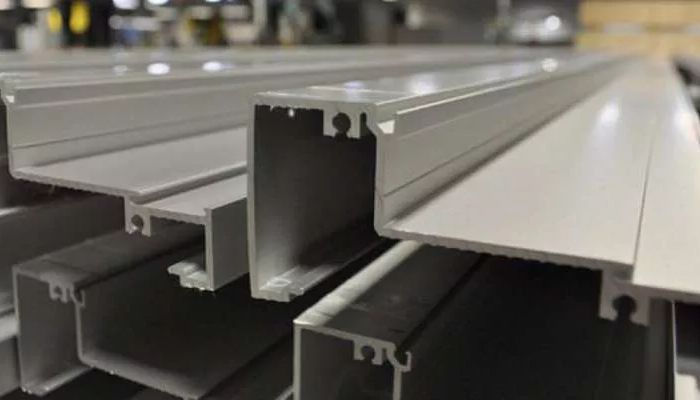
The transportation industry continues to evolve toward higher efficiency, improved safety, and reduced environmental impact.
In this development, material selection plays a critical role, particularly in vehicle structures such as bus bodies.
Manufacturers are no longer focused solely on durability, but also on weight reduction, fuel efficiency, and passenger safety.
This shift has led to the increasing use of Aluminium Extrusion for Bus Body applications.
Aluminium offers a combination of lightweight properties, structural performance, and design flexibility that aligns well with modern transportation requirements.
Understanding how aluminium extrusion contributes to bus body design helps manufacturers and engineers make informed decisions that support both performance and long term value.
ALUMINIUM EXTRUSION FOR BUS BODY
Bus body structures must meet multiple performance criteria at once. They need to support passenger loads, withstand continuous vibration, resist environmental exposure, and provide protection in the event of impact.
Traditionally, steel has been widely used in vehicle structures due to its strength. However, the increasing demand for lighter vehicles has encouraged manufacturers to explore alternative materials that can deliver similar performance with lower weight.
Aluminium extrusion offers a structural solution that addresses these needs. By combining strength with reduced mass, aluminium helps improve overall vehicle efficiency without compromising safety requirements.
In addition, aluminium profiles can be designed to match specific structural functions, making them highly adaptable to different bus body configurations.
Lightweight Advantage and Operational Efficiency
One of the most significant benefits of aluminium in bus body construction is its lightweight nature.
Reducing vehicle weight has a direct impact on operational efficiency, particularly in public transportation systems where buses operate continuously over long distances.
A lighter bus body contributes to improved fuel efficiency and reduced energy consumption. This is especially important as transportation systems move toward sustainability and lower emissions.
The weight reduction also affects vehicle handling and mechanical wear. Lower structural weight reduces stress on components such as suspension systems and braking mechanisms, which can contribute to longer service life and reduced maintenance requirements.
When aluminium extrusion is applied effectively, it supports a more efficient and cost effective transportation system.
Structural Strength and Crash Performance
While weight reduction is important, safety remains a primary concern in bus body design. Aluminium extrusion must provide sufficient strength and structural integrity to protect passengers under normal operation and in the event of an accident.
Aluminium extrusion profiles can be engineered to absorb and distribute impact energy. This energy absorption capability plays a key role in improving crash performance.
Instead of transferring force directly to passengers, well designed aluminium structures help manage impact forces more effectively.
Several factors contribute to this performance :
Profile design optimization.
Extrusion allows specific cross sectional shapes that enhance energy absorption during impact.
Controlled deformation behavior.
Aluminium can deform in a predictable manner, helping to reduce the severity of impact forces.
Structural integration.
Custom profiles allow reinforcement to be built directly into the structure without adding excessive weight.
Through careful design and manufacturing, aluminium extrusion supports bus body structures that balance safety and efficiency.
Design Flexibility Through Aluminium Extrusion
Bus body construction often involves complex geometries, varying dimensions, and the integration of multiple components such as panels, windows, and support structures. Aluminium extrusion provides a high level of design flexibility to accommodate these requirements.
Unlike conventional fabrication methods, extrusion enables the creation of profiles that combine multiple functions into a single component. This can reduce the number of parts required and simplify the overall assembly process.
Some of the practical design advantages include :
• Ability to produce complex and customized cross sectional profiles
• Integration of mounting features and connection points
• Reduction in secondary fabrication processes
This flexibility allows manufacturers to optimize both structural performance and production efficiency, making aluminium extrusion a practical choice for modern bus body design.
Corrosion Resistance and Long Term Durability
Bus bodies are exposed to a wide range of environmental conditions, including humidity, temperature variation, and road contaminants.
Materials used in these structures must maintain their performance over long periods with minimal degradation.
Aluminium naturally forms a protective oxide layer that helps resist corrosion. This property makes it suitable for outdoor and high exposure environments without requiring extensive protective treatment.
Compared to materials that are more prone to corrosion, aluminium offers a more stable and predictable performance over time. This contributes to lower maintenance requirements and improved lifecycle value.
For transportation operators, long term durability is directly linked to operational cost efficiency and service reliability.
Manufacturing Consistency and Quality Requirements
The effectiveness of aluminium extrusion for bus body applications depends heavily on manufacturing quality. Structural components must be produced with consistent dimensions, stable material properties, and reliable surface quality.
In vehicle assembly, even small variations can affect alignment, structural integrity, and overall performance. This makes controlled manufacturing processes essential.
An experienced aluminium extrusion manufacturer ensures that each profile meets the required standards for precision and repeatability. Consistent production quality supports efficient assembly and reliable vehicle performance.
PT. Damai Abadi focuses on maintaining stable extrusion processes and strict quality control. By ensuring dimensional accuracy and material consistency, the company supports bus body manufacturers in achieving dependable structural results.
Supporting Modern Transportation Development
As the transportation industry continues to evolve, the demand for materials that support efficiency, safety, and sustainability will continue to grow.
Aluminium extrusion aligns with these priorities by offering a combination of lightweight performance, structural capability, and design adaptability.
Bus body construction is one area where these advantages are clearly realized. By reducing weight, improving crash performance, and simplifying design, aluminium extrusion contributes to more efficient and reliable transportation systems.
Aluminium Extrusion Company
Material selection is only one part of the equation. The success of aluminium extrusion applications also depends on the quality and reliability of the manufacturing partner.
PT. Damai Abadi supports bus body manufacturers by providing aluminium extrusion solutions designed for precision, consistency, and long term performance.
With a focus on controlled production and application understanding, the company helps ensure that aluminium profiles meet both technical and operational requirements.
For companies exploring Aluminium Extrusion for Bus Body applications, working with an experienced aluminium extrusion manufacturer provides confidence in both product quality and structural performance.
To learn more about how aluminium extrusion can support your bus body design, you are welcome to connect with PT. Damai Abadi for further technical discussion and project consultation.


Comments