.png)
How Aluminium Frame Profiles Deliver Strength, Precision, and Design Flexibility

Modern engineering and construction projects demand structural materials that are lightweight, durable, and adaptable to a wide range of applications.
Whether used in industrial machinery, commercial buildings, transportation systems, or modular structures, framing components must provide reliable performance while allowing efficient assembly and long service life.
This is why the aluminium profile for frame has become one of the most widely used solutions across various industries.
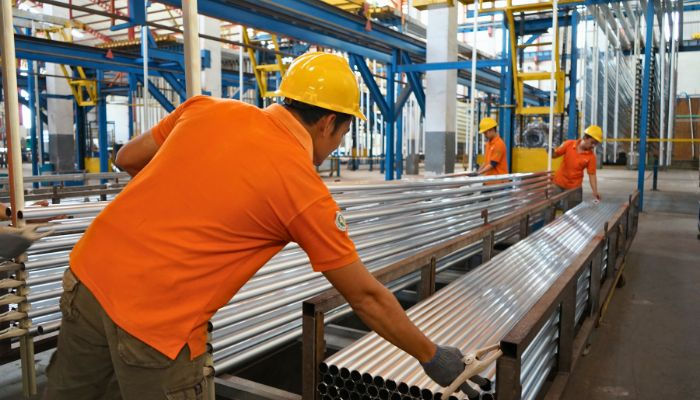
Manufactured through the aluminium extrusion process, these profiles offer exceptional strength, excellent dimensional accuracy, and outstanding design flexibility.
They also allow engineers to develop customized framing systems that meet specific structural and functional requirements without adding unnecessary weight.
In this article, we will explore the advantages of aluminium frame profiles, their common applications, and why choosing an experienced aluminium extrusion manufacturer is essential for achieving reliable project results.
ALUMINIUM PROFILE FOR FRAME
An aluminium profile for frame is an extruded aluminium section designed to create structural frameworks for industrial, commercial, and architectural applications.
Unlike fabricated steel structures that often require extensive welding, aluminium frame profiles can be engineered with integrated features that simplify assembly and improve manufacturing efficiency.
The extrusion process enables manufacturers to produce profiles with consistent cross sections while incorporating functional elements such as fastening grooves, reinforcement sections, connection points, and cable management channels.
This flexibility allows a single profile to perform multiple functions, reducing the number of separate components required during assembly.
Because aluminium extrusion supports both standard and custom profile designs, frame systems can be developed to match virtually any project requirement.
Aluminium for Frame Systems
Aluminium continues to replace traditional framing materials because it combines structural performance with practical manufacturing advantages.
Some of the key benefits include :
• High strength to weight ratio
• Excellent corrosion resistance
• Easy fabrication and machining
• Consistent dimensional accuracy
• Low maintenance throughout the product lifecycle
• Compatibility with anodizing and powder coating finishes
Compared to heavier materials, aluminium simplifies transportation, handling, and installation while maintaining the structural performance required for demanding applications.
Its natural corrosion resistance also makes it suitable for indoor manufacturing facilities as well as outdoor environments exposed to changing weather conditions.
Aluminium Frame Profiles
The performance of a framing system depends not only on the material but also on the profile design.
Aluminium extrusion provides engineers with the freedom to optimize structural efficiency while simplifying manufacturing and assembly.
Several characteristics make aluminium frame profiles particularly effective.
1. Lightweight Without Compromising Strength
One of aluminium's greatest advantages is its ability to provide structural strength while remaining significantly lighter than many traditional materials.
This reduced weight lowers transportation costs, simplifies installation, and improves handling during manufacturing without sacrificing durability.
2. Precision Manufacturing
Modern extrusion technology produces profiles with excellent dimensional consistency.
Accurate profile dimensions improve assembly quality, minimize installation adjustments, and support reliable performance across large production runs.
3. Flexible Design Options
Extrusion technology enables engineers to create profile geometries that match the exact needs of each application.
Integrated fastening slots, mounting channels, reinforcement ribs, and connection features can all be incorporated directly into the profile, reducing fabrication complexity while improving overall functionality.
4. Long Service Life
Aluminium naturally forms a protective oxide layer that helps resist corrosion and environmental exposure.
Combined with optional surface treatments such as anodizing or powder coating, aluminium frame systems can maintain their appearance and structural integrity for many years with minimal maintenance.
Applications of Aluminium Frame Profiles
Because of their versatility, aluminium frame profiles are used in numerous industries where strength, precision, and modularity are essential.
Some of the most common applications include :
Industrial Machinery
Machine frames, automation equipment, production lines, and conveyor systems rely on aluminium framing because it offers excellent structural stability while allowing easy modifications and expansion.
Construction and Architecture
Aluminium frame profiles are widely used for curtain walls, partitions, doors, windows, facade systems, and structural support frameworks in commercial and residential buildings.
Transportation
Vehicle manufacturers use aluminium framing components to reduce overall weight while maintaining durability and structural performance.
Renewable Energy Systems
Solar panel support structures and equipment frames benefit from aluminium's corrosion resistance and lightweight characteristics.
OEM Manufacturing
Many OEM companies develop custom aluminium frame profiles to improve product functionality, simplify assembly, and enhance manufacturing efficiency.
The ability to customize profile geometry makes aluminium extrusion suitable for both standardized systems and highly specialized engineering projects.
Aluminium Extrusion Company
The performance of an aluminium frame system depends heavily on manufacturing quality.
Precision die design, controlled extrusion parameters, and strict quality inspection are essential for producing profiles that consistently meet engineering specifications.
At PT Damai Abadi, we combine engineering expertise with advanced extrusion technology to manufacture aluminium profiles that support demanding industrial and construction applications.
Our capabilities include :
• Custom aluminium profile development
• Precision extrusion manufacturing
• Machining and fabrication services
• Surface finishing, including anodizing and powder coating
• Comprehensive quality control throughout production
By working closely with our customers from the earliest stages of product development, we help optimize profile designs for both structural performance and manufacturing efficiency.
Whether the project requires standard framing profiles or completely customized extrusion solutions, our team is committed to delivering products with consistent quality and dependable performance.
Build Stronger Projects with PT Damai Abadi
Selecting the right aluminium extrusion manufacturer is a key step in ensuring the success of any structural project.
A reliable manufacturing partner not only delivers high quality products but also provides the engineering support needed to develop efficient and cost effective solutions.
At PT Damai Abadi, we provide complete aluminium extrusion solutions for construction companies, industrial manufacturers, OEM businesses, and engineering firms across domestic and international markets.
From custom profile design and die development to precision extrusion, machining, and finishing, we offer integrated manufacturing services that support every stage of your project.
If you are looking for a trusted supplier of aluminium profile for frame applications, PT Damai Abadi is ready to help.
Contact our team today to discuss your requirements and discover how our custom aluminium extrusion solutions can improve the strength, precision, and flexibility of your next construction or industrial project.


Comments