.png)
Understanding Different Types of Aluminium Extrusion and Their Industrial Applications
- PT Damai Abadi .
- Dec 1, 2025
- 4 min read

Understanding the different types of aluminium extrusion is the first step in selecting the right material and profile geometry for any engineering or design project.
The process of aluminium extrusion involves heating an aluminium billet and forcing it through a shaped die to create a profile with a fixed cross-sectional design.
This technique is fundamental to modern manufacturing, enabling the creation of lightweight, strong, and highly customizable components used across countless industries.
By exploring the unique characteristics of each category, you can ensure your final product meets critical demands for performance, cost-efficiency, and structural integrity.
What is Aluminium Extrusion
Aluminium extrusion transforms raw aluminium material into components with precise, intricate, and consistent cross-sections. This method leverages the material's unique combination of low density, high strength-to-weight ratio, and excellent corrosion resistance.
The resulting profiles offer design flexibility that few other manufacturing processes can match, making them a staple in modern engineering.
The strength of aluminium extrusion lies in its ability to consolidate multiple functions—such as structural support, thermal management, and decorative finishing into a single, complex part.
This reduces the need for secondary assembly, cutting down on both production time and overall manufacturing costs. Furthermore, the material is infinitely recyclable without losing its quality, supporting sustainable design practices across all sectors.
Types of Aluminium Extrusion
Aluminium extrusions are primarily classified based on the complexity of their cross-section and the presence or absence of internal voids or cavities. This classification dictates both the profile’s structural capabilities and the complexity of the die required for its manufacture.
We can categorize the foundational types of aluminium extrusion into three main groups: solid, semi-hollow, and hollow profiles.
1. Solid profiles
Solid aluminium extrusions have no voids (e.g., rods, I-beams), making them the simplest and most economical to produce using a basic die.
They are used when maximum material density and strength are required across the cross-section, offering reliable performance for managing bending and tensile forces.
They are the default choice for general structural support and straightforward framing systems.
2. Semi-hollow profiles
Semi-hollow extrusions feature partially enclosed voids, requiring a complex die setup with a mandrel. These profiles balance material efficiency and rigidity, allowing for weight reduction compared to solid profiles.
They are frequently used for applications needing internal features like fastener slots or snap-fits (e.g., window frames, track systems), managing cost while adding key functionality.
3. Hollow profiles
Hollow aluminium extrusions contain enclosed voids, requiring a specialized porthole or bridge die to form complex, multi-cell geometries like tubes.
Their primary benefit is a superior strength-to-weight ratio, achieved by strategically placing material to resist torsion and bending with minimal mass.
This makes them vital for weight-critical applications (e.g., EVs, aerospace). The internal voids also serve functional roles as concealed conduits for wiring or fluid channels.
Structural vs. Non-Structural Extrusions
Extrusions are functionally classified by their intended role: carrying loads versus aesthetic/containment. This classification quickly narrows down necessary alloy, wall thickness, and engineering tolerance, moving the focus beyond the physical shape.
1. Structural Extrusions
Structural aluminium extrusions bear heavy loads and ensure stability, typically using high-strength alloys (like 6061) and strict tolerances for reliable connections.
Used in applications like bridge decks and vehicle chassis, their primary function is safety and stability, requiring paramount material integrity for large-scale projects.
2. Non-Structural Extrusions
Non-structural extrusions (architectural/decorative) are used mainly for aesthetic finishes, cladding, and enclosures. They typically utilize 6063 alloy for its superior surface finish and response to decorative treatments.
Examples include trim pieces and LED housings. Their advantage lies in design flexibility and integrating a finished look with component protection.
Industrial Applications Driven
The selection of the right extrusion profile is entirely dependent on the specific needs of the industry and the component’s operational environment.
Different types of aluminium extrusion are favored in key sectors due to their inherent material advantages and cost-effectiveness for particular tasks. The industrial use often dictates the necessary alloy, shape complexity, and required surface finish.
1. Construction and Architecture
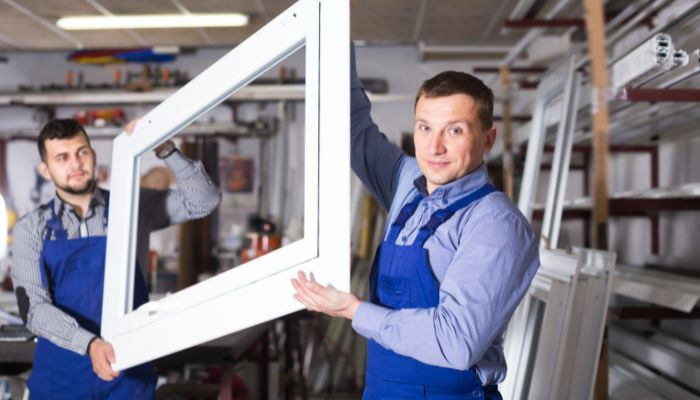
The construction industry utilizes hollow and semi-hollow extrusions for windows/doors, leveraging their thermal break capabilities for energy efficiency and ease of on-site assembly.
Structural profiles (I-beams, channels) support facades and modular builds; their high strength-to-weight ratio simplifies logistics. Aluminum's natural durability and corrosion resistance make it an ideal, long-term exterior material.
2. Transportation and Automotive
Automotive and rail industries rely on complex hollow extrusions for components (chassis, battery enclosures) to achieve weight reduction and increase EV range. These profiles absorb crash energy while maintaining low mass.
Specialized extrusions are used internally (seating rails). Integrating features like bolt slots minimizes welding/machining, streamlining assembly.
3. Consumer Goods and Electronics
Consumer electronics utilize specialized solid extrusions as high-performance heat sinks (e.g., for computers and LEDs), leveraging aluminum's excellent thermal conductivity for component stability.
In consumer goods, semi-hollow profiles are used for items like furniture due to their efficiency. The material's ease of finishing (anodizing/powder coating) provides durable aesthetics, while extrusion precision ensures consistent fitment for mass production.
Why Material Properties Matter for Extrusion Success
An extrusion's performance is defined by its alloy as much as its shape, determining properties like strength, weldability, and corrosion resistance. Matching the alloy (e.g., 6063 vs. 6061) to the application is essential.
6063 is the architectural alloy (visual, non-structural) due to its superior finish. 6061 is chosen for high-load structural uses due to its superior strength. Engineers must specify the correct temper (T6) to ensure peak strength is achieved.
Extrusion offers design flexibility for complex internal features (voids, screw ports). This capability reduces subsequent manufacturing steps and the total number of parts in an assembly, crucial for cost-efficient, lightweight solutions.
Selecting the Right Type for Your Needs
Selecting the correct profile requires careful consideration of the structural demands, aesthetic requirements, and budget constraints of your project.
Whether you need the robust simplicity of a solid bar or the advanced thermal efficiency of a complex hollow profile, a specific one of the various types of aluminium extrusion exists to meet your exact engineering need.
By understanding the core distinctions between solid, semi-hollow, and hollow, as well as the structural and non-structural classifications, you can make an informed decision that ensures optimal performance and efficiency.
As a leader in aluminium extrusion manufacturing with over 30 years of expertise, PT Damai Abadi is uniquely positioned to fulfill your specific needs.
With integrated facilities in Medan and Tangerang, we utilize the latest equipment, including in-house design and molding centers, to produce top-quality aluminium extrusions.

Comments