.png)
Aluminium Glass Profiles : A Complete Guide for Modern Architecture

Modern architecture continues to evolve toward designs that emphasize openness, natural light, and visual clarity.
Glass has become a defining material in this transformation, allowing spaces to feel larger, brighter, and more connected to their surroundings.
However, the performance of glass systems depends heavily on the structural support behind them.
This is where Aluminium Glass Profiles play a critical role. They provide the framework that holds glass panels securely while maintaining the clean and minimal aesthetic that modern architecture demands.
Beyond structural support, aluminium profiles also influence durability, installation efficiency, and long term performance.
Understanding how aluminium glass profiles function and why they are widely used helps architects, engineers, and developers make better design and material decisions.
ALUMINIUM GLASS PROFILES
Aluminium glass profiles are used to frame and support glass panels in a wide range of architectural applications.
These profiles are designed to hold glass securely while allowing for expansion, movement, and environmental exposure.
In modern construction, glass is often used in large panels, whether in facades, windows, doors, or interior partitions. Without a reliable framing system, maintaining stability and safety would be difficult.
Aluminium provides an ideal solution due to its balance of strength and lightweight properties. It supports glass panels without adding excessive structural load, making it suitable for both large scale and detailed architectural applications.
The precision of aluminium extrusion also ensures that profiles fit accurately, which is essential for both structural performance and visual alignment.
Material selection plays an important role in the performance of glass framing systems. Aluminium has become the preferred choice due to its ability to meet both technical and aesthetic requirements.
Several factors contribute to this preference :
Strength combined with lightweight structure.
Aluminium provides sufficient support for glass panels while reducing overall system weight. This helps simplify installation and reduces structural demands.
Corrosion resistance for long term use.
Architectural applications often involve exposure to weather conditions. Aluminium resists corrosion, making it suitable for both interior and exterior use.
Compatibility with modern finishing processes.
Aluminium profiles can be anodized or coated to achieve consistent appearance and protection, supporting various design styles.
These characteristics make aluminium glass profiles a reliable and adaptable solution in contemporary architecture.
Design Flexibility and Aesthetic Integration
One of the defining features of modern architecture is its focus on visual simplicity and integration. Aluminium glass profiles support this approach by allowing clean lines and minimal framing.
Through the extrusion process, aluminium can be shaped into profiles that meet specific design requirements. This enables architects to create systems that align with both structural needs and aesthetic goals.
Design flexibility includes :
• Slim profile designs that reduce visual obstruction
• Custom dimensions to accommodate different glass thicknesses
• Integration with sliding, folding, or fixed glass systems
This level of adaptability allows aluminium glass profiles to be used in a wide range of architectural concepts, from residential spaces to large commercial buildings.
Structural Stability and Performance Considerations
Glass systems must maintain stability under various conditions, including wind load, temperature changes, and continuous use.
The framing system plays a key role in ensuring that glass panels remain secure and properly aligned.
Aluminium glass profiles are designed to support these requirements. Their structural performance depends on accurate dimensions, proper installation, and consistent material quality.
In addition to strength, flexibility is also important. Aluminium can accommodate slight movement without compromising structural integrity, which helps prevent stress on glass panels.
This balance between rigidity and adaptability supports reliable performance in real world conditions.
Installation Efficiency and Practical Advantages
Construction efficiency is an important consideration in modern projects. Materials and systems that simplify installation can significantly reduce project timelines and labor requirements.
Aluminium glass profiles contribute to efficient installation in several ways :
• Lightweight components are easier to handle and position
• Precision extrusion reduces the need for on site adjustments
• Modular systems allow faster assembly and alignment
These advantages are particularly valuable in projects that involve large glass surfaces or tight construction schedules.
Efficient installation not only saves time but also helps ensure that systems are assembled correctly, reducing the risk of future issues.
Durability and Long Term Maintenance
Architectural systems are expected to maintain both performance and appearance over time. Aluminium glass profiles offer durability that supports long term use with minimal maintenance.
The natural corrosion resistance of aluminium allows it to perform well in various environments, including areas with high humidity or exposure to outdoor elements.
When combined with proper surface finishing, aluminium profiles can maintain their appearance for extended periods.
Low maintenance requirements are an important benefit for building owners and operators. Reduced need for repairs or refinishing contributes to lower lifecycle costs and improved operational efficiency.
The Importance of Precision Manufacturing
The effectiveness of aluminium glass profiles depends not only on design but also on manufacturing quality.
Profiles must be produced with consistent dimensions and surface quality to ensure proper fit and performance.
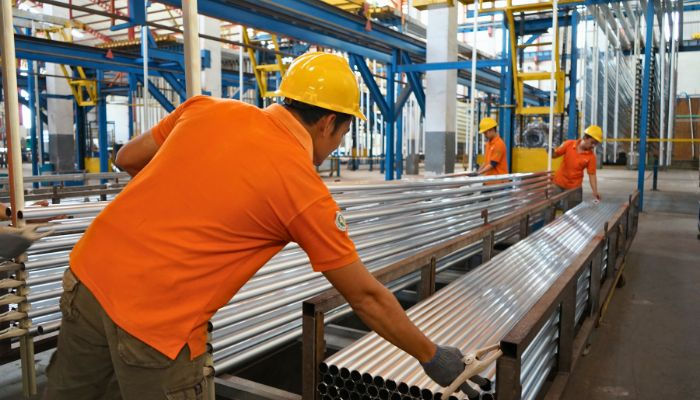
Inconsistent profiles can lead to installation challenges, misalignment, and reduced structural stability. This makes it essential to work with an aluminium extrusion manufacturer that maintains strict quality control.
PT. Damai Abadi focuses on delivering aluminium extrusion products with controlled precision and consistent output.
By ensuring that each profile meets required specifications, the company supports architectural systems that perform reliably in both function and appearance.
Supporting Modern Architectural Development
As architectural design continues to prioritize transparency, efficiency, and sustainability, the role of aluminium glass profiles will remain significant.
Their ability to support large glass surfaces while maintaining structural reliability makes them an essential component in modern construction.
From residential projects to commercial developments, aluminium glass profiles enable designs that are both visually appealing and technically sound.
Their adaptability allows architects to explore new concepts while maintaining confidence in performance.
Aluminium Extrusion Company
Aluminium glass profiles provide a foundation for modern architectural systems that require precision, durability, and design flexibility.
Their contribution goes beyond structural support, influencing the overall quality and longevity of glass installations.
Working with a reliable aluminium extrusion manufacturer ensures that these profiles meet the standards required for demanding applications. Consistency, accuracy, and material quality all play a role in achieving successful outcomes.
PT. Damai Abadi supports architectural projects by providing aluminium extrusion solutions designed for long term performance and reliability.
With a focus on controlled manufacturing processes, the company helps ensure that aluminium glass profiles deliver both functional and aesthetic value.
For architects, developers, and project planners exploring glass based designs, aluminium glass profiles offer a dependable and adaptable solution for modern construction.


Comments