.png)
A Practical Guide to Welding Aluminium Profiles for Strong and Clean Results
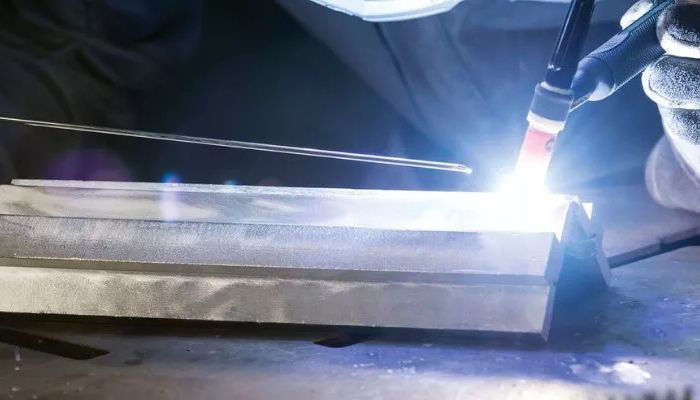
In many construction and industrial applications, aluminium extrusion profiles are not always used as standalone components.
They often need to be joined, assembled, or integrated into larger systems. One of the most effective methods for permanent joining is welding.
WELD ALUMINIUM PROFILES
However, to weld aluminium profiles successfully requires more than basic welding knowledge. Aluminium behaves differently from steel, and improper handling can lead to weak joints, surface defects, or structural failure.
At PT. Damai Abadi, we manufacture aluminium extrusion profiles designed to support various fabrication processes, including welding.
By understanding how to weld aluminium profiles correctly, manufacturers and engineers can achieve strong, clean, and reliable results.
The Challenges of Welding Aluminium
Welding aluminium is more complex than welding many other metals due to its physical and chemical properties.
Some of the main challenges include :
High thermal conductivity, which causes heat to spread quickly
Low melting point compared to steel
Formation of an oxide layer that must be removed before welding
Sensitivity to contamination
These characteristics require careful control of welding parameters and proper preparation.
When planning to weld aluminium profiles, it is important to understand these challenges to avoid defects such as porosity or weak joints.
Welding Methods for Aluminium Profiles
There are several welding methods suitable for aluminium, each with its own advantages depending on the application.
The most commonly used methods include :
TIG welding
This method provides high precision and clean welds. It is ideal for thin profiles and applications where appearance is important.
MIG welding
This method is faster and suitable for thicker sections or larger production volumes. It offers good strength and efficiency.
Friction stir welding
This is a more advanced method used in specialized applications. It produces strong joints with minimal distortion.
Selecting the right method depends on profile thickness, application requirements, and production scale.
1. Preparing Aluminium Profiles for Welding
Preparation is one of the most important steps when you weld aluminium profiles. Without proper preparation, even the best welding technique may fail.
Key preparation steps include :
Cleaning the surface to remove dirt, oil, and contaminants
Removing the oxide layer using mechanical or chemical methods
Ensuring proper fit up between components
Securing the profiles to prevent movement during welding
Clean and properly prepared surfaces allow better fusion and stronger welds.
At PT. Damai Abadi, we ensure that our extrusion profiles have consistent surface quality, making them suitable for further fabrication processes.
2. Selecting the Right Filler Material
The choice of filler material plays a significant role in determining the strength and quality of the weld.
Different aluminium alloys require compatible filler materials to achieve optimal results.
When selecting filler material, consider :
Base alloy composition
Required mechanical strength
Corrosion resistance
Final appearance
Using the correct filler material ensures compatibility and reduces the risk of cracking or weak joints.
3. Controlling Heat Input
Heat control is critical when welding aluminium. Excessive heat can lead to distortion, burn through, or reduced mechanical strength.
To achieve good results when you weld aluminium profiles, it is important to :
Maintain consistent welding speed
Use appropriate current settings
Avoid overheating the material
Allow proper cooling between passes if needed
Proper heat management ensures that the weld remains strong without damaging the profile.
4. Achieving Clean and Consistent Welds
Clean welds are important not only for structural performance but also for appearance, especially in architectural applications.
To achieve clean results :
Use proper shielding gas to prevent contamination
Maintain stable arc control
Ensure consistent welding technique
Avoid interruptions during the welding process
A controlled process leads to smooth weld beads and minimal defects.
5. Post Welding Considerations
After welding, additional steps may be required to ensure the final product meets quality standards.
Post welding processes may include :
Inspection of weld quality
Removal of surface discoloration
Surface finishing such as grinding or polishing
Preparation for anodizing or coating
These steps help improve both the structural integrity and appearance of the welded profiles.
Impact on Structural Performance
When done correctly, welding can create strong and durable joints in aluminium profiles.
However, improper welding can weaken the material, particularly in the heat affected zone.
To maintain structural performance :
Use appropriate welding techniques
Select compatible materials
Control heat input carefully
Understanding these factors ensures that welded joints perform reliably under load.
Applications of Welded Aluminium
The ability to weld aluminium profiles expands their use across many industries.
Common applications include :
Structural frames in construction
Industrial machinery and equipment
Transportation components
Custom fabricated systems
In many cases, welding allows for more efficient designs by reducing the need for mechanical fasteners.
At PT. Damai Abadi, we support these applications by providing high quality extrusion profiles that are suitable for welding.
Design Considerations for Welded Profiles
Design plays an important role in ensuring successful welding.
Profiles should be designed with welding in mind to reduce complexity and improve joint quality.
Important considerations include :
Providing adequate access for welding
Avoiding unnecessary thickness variations
Designing joints that allow proper heat distribution
Minimizing stress concentration points
By considering these factors early in the design stage, manufacturers can improve both efficiency and final product quality.
Aluminium Extrusion Indonesia
At PT. Damai Abadi, we understand that welding is an important part of aluminium fabrication.
We support our clients by :
Producing extrusion profiles with consistent material quality
Ensuring dimensional accuracy for proper fit up
Providing technical insight for fabrication processes
Supporting custom profile design for welding applications
Our goal is to ensure that our products perform well not only in extrusion, but also in downstream processes such as welding.
Conclusion
To weld aluminium profiles successfully requires a combination of proper preparation, correct technique, and careful control of process variables.
By understanding the unique properties of aluminium, manufacturers can achieve strong, clean, and reliable welds.
Welding expands the versatility of aluminium extrusion, allowing it to be used in more complex and demanding applications.
At PT. Damai Abadi, we combine precision extrusion manufacturing with a deep understanding of fabrication processes to deliver aluminium solutions that meet the highest standards.
Through this approach, we help our clients achieve durable, efficient, and high quality results in every project.


Comments